
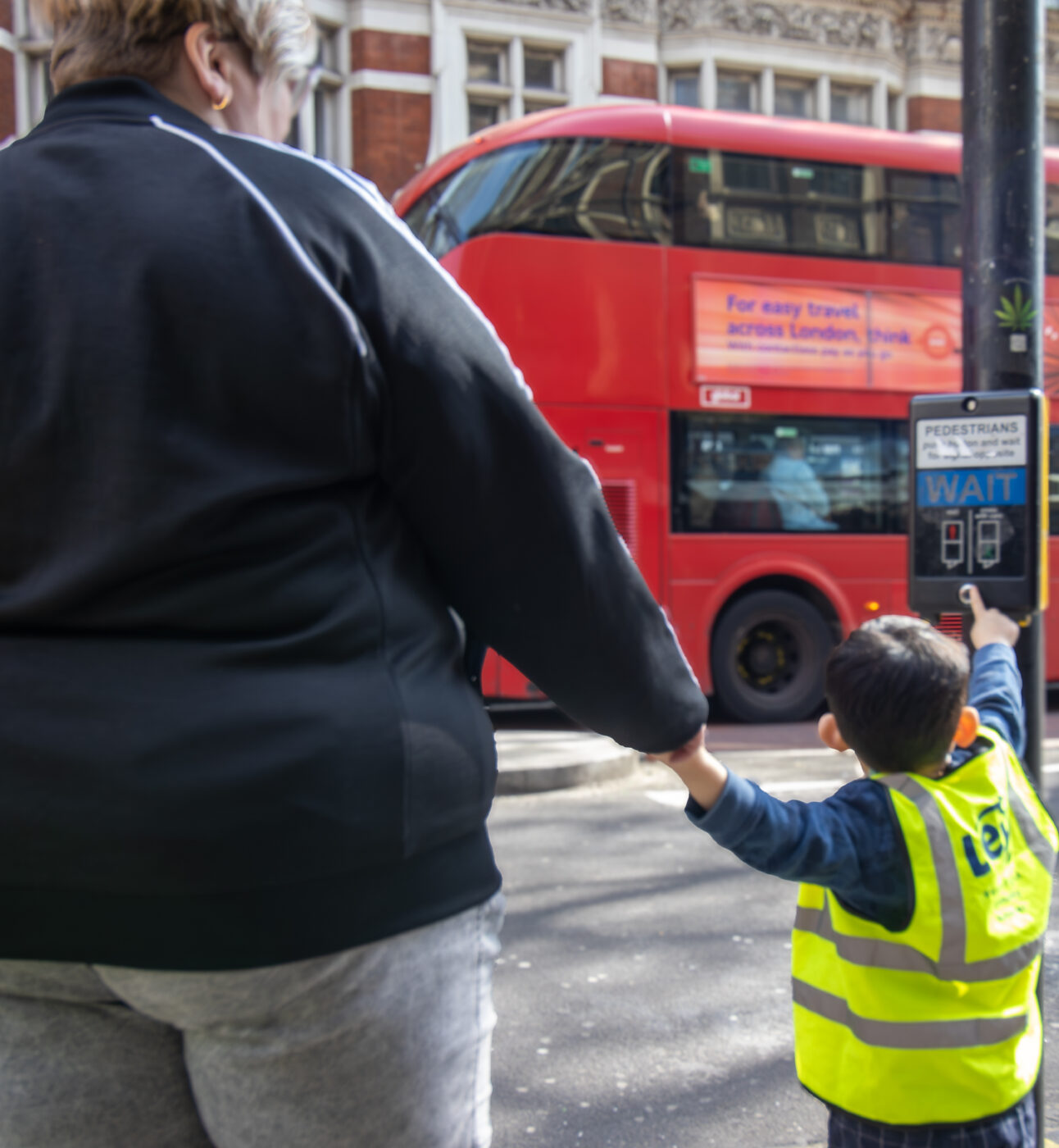
What are our children breathing?
We spend a great deal of time in Early Years thinking about what children eat, what they drink, how much they move and whether they spend enough time outdoors.
August 5th 2026
One of the great pleasures of our Action for Sustainability Community of Practice is that it brings together educators, researchers and leaders from across the world who are asking similar questions but answering them in different cultural contexts.
In our conversation, which you can listen to on YouTube here, we explored some of these questions and the different ways sustainability can become part of everyday practice. You can also read Dr Ayça Alan’s research deck, Empowering Pre-service Teachers for a Sustainable World, here. Each meeting reminds us that sustainability in early childhood education is not a finished destination but a collective learning journey.
Our latest session featured Dr Ayça Alan, an independent researcher based in Ankara, Türkiye, who shared the findings from her doctoral research exploring how pre-service early childhood teachers can become more confident and capable in embedding sustainability into their everyday practice.
Her research began with a simple but important observation. Student teachers often expressed positive attitudes towards sustainability but struggled to translate those values into meaningful learning experiences for children. Sustainability appeared in activity plans, but frequently as isolated environmental activities rather than as a way of thinking about education. Rather than accepting this gap, Dr Alan asked what kind of professional learning could genuinely empower educators to become agents of change.
The study followed six final-year Early Childhood Education students undertaking their teaching placements at a public university with a strong environmental ethos. Using a single case study design, Dr Alan developed a professional learning programme informed by the participants’ existing knowledge, experiences and beliefs.
The programme was inspired by the work of Paulo Freire, drawing on critical literacy and problem-posing pedagogy rather than traditional transmission teaching. Instead of presenting sustainability education as a body of knowledge to memorise, participants worked together as a learning community, questioning assumptions, analysing picture books, videos and everyday media, and reflecting critically on issues such as social justice, equity, consumption, intergenerational responsibility and relationships between people and the natural world.
Learning took place through a combination of face-to-face workshops, online discussions, reflective journals, activity plan analysis, field notes and interviews before and after the programme. The participants even named their learning community The Beehive, reflecting the sense of collaboration and shared purpose that emerged throughout the project.
The findings were encouraging because they demonstrated change on several levels. Participants developed a deeper understanding of sustainability both as citizens and as future educators. They reported greater confidence in teaching sustainability, moved beyond seeing it purely as environmental protection and began to recognise its social, cultural and economic dimensions.
Perhaps more importantly, these new understandings began to influence everyday practice. Participants described changing their own sustainable consumption habits, sharing ideas with neighbours and family, and introducing new approaches during their teaching placements. Around half reported influencing their mentor teachers, who subsequently incorporated sustainability into their own classroom practice. This ripple effect is particularly significant. Professional learning did not remain with the individual student teacher. It began to influence colleagues and nursery practice more widely.
One of the most striking aspects of the discussion was Dr Alan’s reflection on why participants were able to change.
When asked how values became practice, she pointed not first to knowledge, but to belonging. Being part of a learning community gave participants confidence, solidarity and permission to experiment. They learnt with one another rather than simply from an expert. That sense of shared enquiry appears to have been a crucial ingredient in helping sustainability move from theory into everyday action.
This resonates strongly with what we see across early childhood education. Sustainable change rarely happens because someone attends a one-day course. It happens when people belong to communities where questioning, reflection and experimentation become normal ways of working.
The discussion also highlighted an issue many educators will recognise.
Too often sustainability becomes reduced to recycling projects, compost bins or planting flowers. While these activities certainly have value, they risk becoming tokenistic if they are disconnected from wider questions about fairness, equity, consumption, citizenship and our responsibilities to one another and to future generations. Dr Alan’s work offers a much richer vision. Sustainability becomes a way of thinking rather than simply a collection of activities.
For those of us interested in Education for Sustainability, this distinction matters enormously.
One of the ambitions of the Action for Sustainability Community of Practice is to make research accessible and useful. Excellent doctoral research should not remain hidden on a university shelf. It should challenge our assumptions, inform our decisions and improve what happens for children every day.
Dr Alan’s work reminds us that becoming sustainability-informed is not simply about acquiring knowledge. It is about developing critical thinking, confidence, agency and collective responsibility. That is a message worth sharing.
We are grateful to Dr Ayça Alan for presenting her work and look forward to sharing links to her doctoral research so members can explore the methodology and findings in greater depth. We hope her study encourages educators, researchers and leaders everywhere to think differently about how we prepare the next generation of early childhood professionals to lead sustainability with both confidence and purpose.
Read: Empowering Pre-service Teachers for a Sustainable World by Havva Ayça Alan, PhD
We spend a great deal of time in Early Years thinking about what children eat, what they drink, how much they move and whether they spend enough time outdoors.
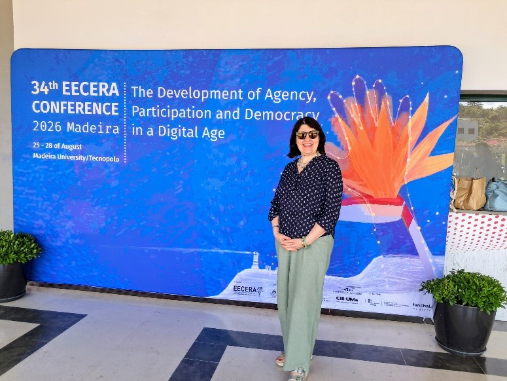
Even in a digital age, nobody goes to a good conference without a notebook. I spent three days at the 34th EECERA Conference at the University of Madeira…
Why listen to this episode? Hear directly from Professor Barbara Rogoff on sociocultural learning and how children learn through participation Explore why culture and…